
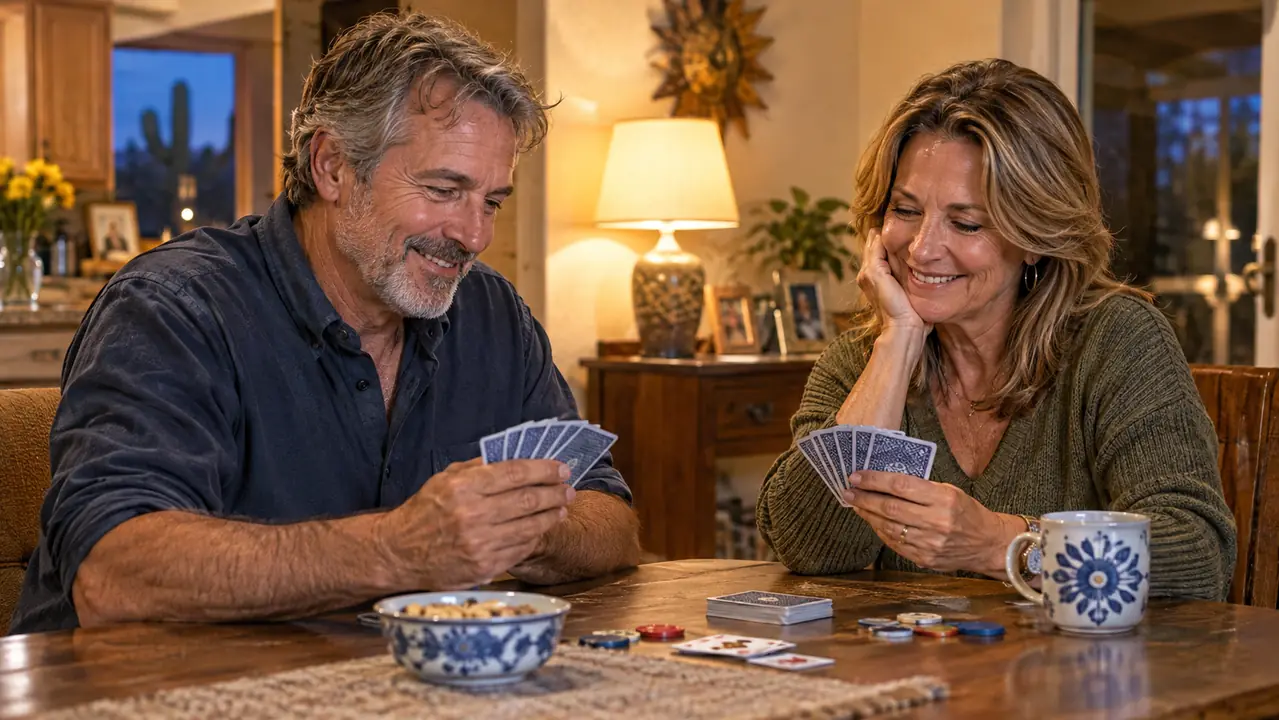
The first time I put Asmodee's Jaipur on our kitchen table, Mark looked at the little market of cards and tokens and asked if we were about to play a shopping game. I laughed, dealt the first hand, and watched him change his mind by the second round. We are Renee and Mark Holloway, 56 and 58, married 31 years, living in Mesa, Arizona. Our kids are grown and out of the house, and Friday night at the kitchen table has become our standing date. We have played both Jaipur and Lost Cities enough times to know they are not the same kind of fun.
If you want the short answer, Jaipur is the warmer game for a couple who wants to talk, trade, and feel a little playful. Lost Cities is the sharper game for two people who like a quiet puzzle and do not mind a tense finish. Jaipur, from Asmodee, is built for exactly two players ages 10 and up and runs about 30 minutes. It gives you goods cards, tokens, camels, and a market that changes every turn. Lost Cities gives you expeditions, wagers, and a push and pull that can turn cautious in a hurry. We keep both. If I had to pick one for a Friday night when we want to reconnect, I pick Jaipur. If Mark wants to beat me without much table talk, he picks Lost Cities.
| Jaipur (Asmodee) | Lost Cities | |
|---|---|---|
| Player count | Exactly 2 players | Exactly 2 players |
| Play time | About 30 minutes | About 30 minutes |
| Age range | Ages 10 and up | Ages 10 and up |
| Table footprint | Cards and tokens need room to spread out | One deck and a small score area |
| Interaction | Trading, market timing, and watching what your partner needs | Mostly separate expeditions with shared discard piles |
| Rules to teach | Simple turns, but the goods and bonus tokens take a round to learn | Very light rules, though the scoring can feel mathy at the end |
| Tactile feel | Cards plus goods tokens, bonus tokens, and a camel token | Cards only |
| Tension | The market can dry up, but the mood stays light | Wager cards and expedition starts make every draw feel risky |
| Table talk | Easy to chat, tease, and comment on the market | Quieter focus with less chatter |
| Setup and cleanup | Sort tokens and shuffle the decks | Shuffle one deck |
| Replay | High, especially if you like a changing market | High, especially if you like a tight puzzle |
| Best for | Couples who want a social, tactile game | Couples who want a compact, brainy duel |
Where Jaipur Wins
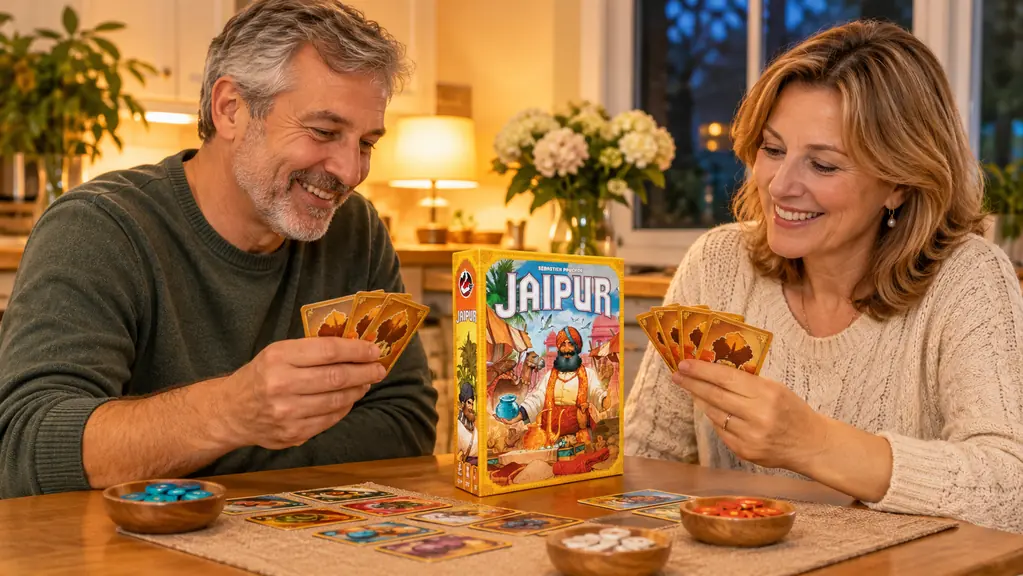
What Jaipur does better than any two-player card game we have tried is make the table feel social. The cards sit between you, and every turn asks you to look at what your partner is collecting. Are they heavy in spices? Have they been ignoring cloth? Do you take the camels now or wait one more turn? That small push and pull gives us something to talk about. The 55 Goods cards, 38 Goods tokens, 18 Bonus tokens, one Camel token, and three seals give the game a physical, rummage-sale feel that Lost Cities does not try to match. Mark likes to stack his tokens in little piles. I like to spread mine out. It sounds silly, but that bit of mess makes the game feel like an event instead of a puzzle.
The spread matters more than I expected on a real kitchen table. Ours is 36 inches wide and about 60 inches long, and Lost Cities takes up maybe a third of it. Jaipur eats a good two feet of width once I lay the market row out and set the token stacks where both of us can reach them. The first night we tried it on a tray in the living room, the tokens kept sliding off the edge and we gave up halfway through a round. Now it lives on the big table or it does not come out. If your only space is a small side table or a coffee table with a lip, know that going in. The game is not hard to play, but it does want room to breathe, and cramped space turns a pleasant market into a fumbling contest.
Jaipur also wins on approachability. It is built for two players ages 10 and up, and each game runs about 30 minutes, which fits the space between dinner and the dishes. The rules are not weightless. You have to learn how the goods tokens shift in value, and the bonus tokens take a round or two to click. But the turn itself is simple. Take a card, play a card, trade, or sell. The game uses card drafting, hand management, and set collection, and it teaches those ideas without a lecture. Asmodee keeps the rulebook short enough that we taught it to another couple over coffee and still finished a game before the pot went cold.
That teaching session is worth describing, because it is the honest test of a game like this. Our neighbors came over on a Sunday in March, and neither of them had played a modern card game since college. I read the rules aloud for about four minutes, dealt a practice round, and then let them play a real one while I watched. The wife understood the goods values right away and started hoarding silver. The husband kept forgetting that the camels let you take the whole row and take a card for free, and I had to remind him three times. By the end of the second game, he was beating her on bonus tokens. Lost Cities would have been an easier first teach, I will admit that plainly. But Jaipur gave that couple more to laugh about, and they asked to play it again the next time they came over.
Where Lost Cities Wins
Lost Cities wins on portability and tension. It is one deck, a score pad, and a small footprint. We can play it on the back patio, on a tray in the living room, or at a diner table without moving the salt shaker. Setup is a shuffle. Cleanup is a shuffle. Jaipur asks you to sort tokens and make room for the cards; Lost Cities asks for a flat surface and two people who are willing to sit still. On nights when we are tired and do not want a production, that matters.
We put that to the test on a road trip up to Flagstaff two summers ago. I had packed Lost Cities almost as an afterthought, wedged in a tote bag next to a paperback, and we played it four times at a campground picnic table in about two hours. There is no way Jaipur would have survived that trip. The tokens would have been rolling into the dirt by the second hand, and I would have spent the whole game counting pieces instead of playing. Lost Cities was already shuffled and dealt before the coffee was poured. Packing it is like packing a deck of playing cards. Packing Jaipur is like packing a small box of game night. Both are fine, but only one of them slips into a tote.
Lost Cities also wins for the quiet, brainy couple. Every expedition you start costs you points upfront, and every wager card you add raises the stakes. You draw, you play, or you discard, and the discard pile is a message your partner can read. The game is less chatty than Jaipur. That is not a flaw. It is a different kind of date night. When Mark and I play Lost Cities, we lean in, we count, and we get a little quiet. The finish can be tense without being mean. If you like the feeling of a close chess endgame more than the feeling of a busy market, Lost Cities will fit your table better.
How We Actually Play Them
Our Friday routine is not fancy. We eat around 6:30, clear the plates, and make coffee. If we want to talk, I set Jaipur on the table. If we want to unwind without much conversation, Mark reaches for Lost Cities. We have learned to read the night before we pick the game. After a week of work calls, Mark usually wants the quiet one. After a week of being home alone in a quiet house, I usually want the one with camels and trading. The empty nest is the reason we started this in the first place. We needed something to do besides watch another show.
We have also learned that both games are better when we do not keep score across weeks. Jaipur has a scoring rhythm that can make one bad round feel like a hole. Lost Cities can do the same with a failed expedition. We play one game, maybe two, and then we stop. The point is the hour at the table, not a season standings. That may sound soft, but it is the truth. A game that makes one of us sulk is not a good date night game, no matter how clever it is.
There was one Friday last October I still think about. Mark had come home late after a long stretch of service calls, and I had already set out Jaipur because I wanted company. He sat down, played two turns, and I could see his shoulders were still up around his ears. I put the cards back in the box, and we played Lost Cities instead with the radio on low and almost no conversation. He beat me by a wide margin and then fell asleep on the couch before ten. The next Friday we played Jaipur twice and talked until midnight. That is how it goes. The game is a tool for the night you are having, and some nights want a market and some nights want a quiet deck. Neither one is the better game on its own. The better game is the one that matches the mood, and knowing that took us a couple of years to learn.
The night I took three seals in a row, Mark asked for a rematch before I had cleared the table.
If you want the Friday-night talker, start with Asmodee's Jaipur
Jaipur is the one we set out when we want trading, teasing, and a game that keeps both of us looking at the same cards. It plays in about 30 minutes for exactly two players ages 10 and up, and it comes with the full market of goods, tokens, camels, and seals.
Amazon See Jaipur on Amazon →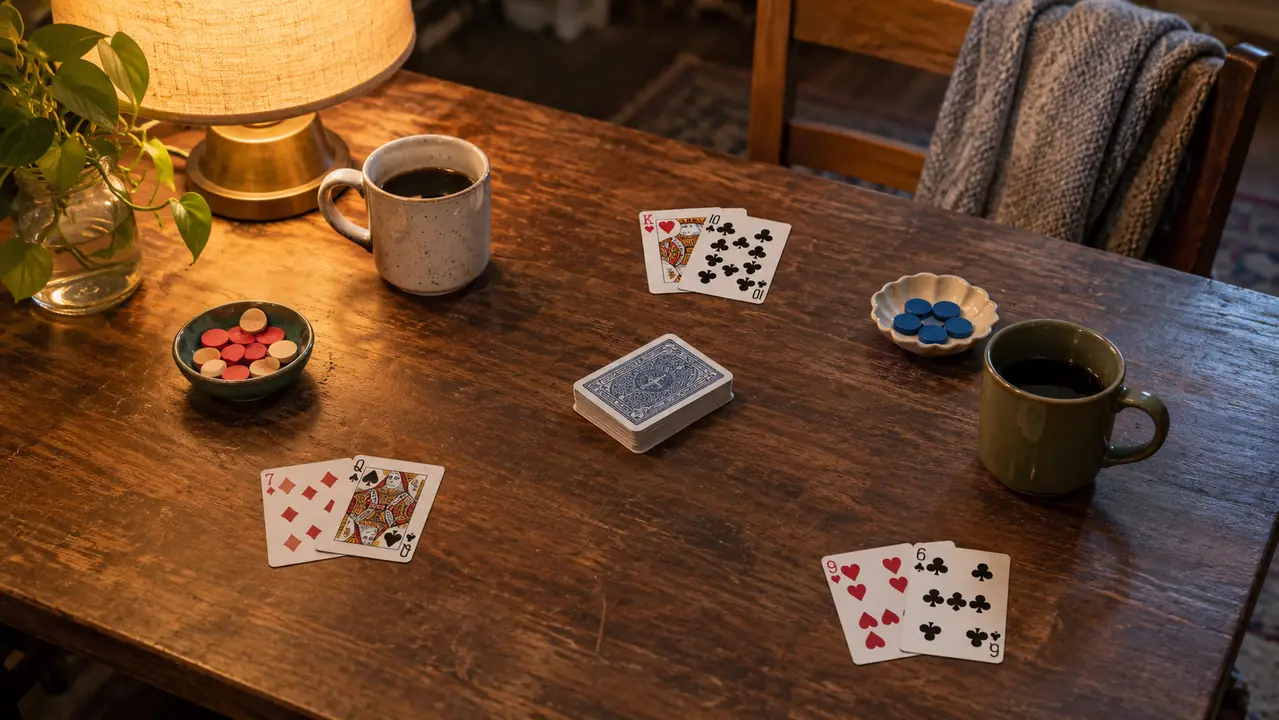
Who Should Buy Which
Buy Jaipur if you want a game that invites conversation. It is the better pick for couples who are new to two-player card games, for date nights when one person is not a game person yet, and for anyone who likes a table with pieces to touch. The 30-minute play time and the 10 and up age range make it easy to bring out with another couple or an older child. It is also the one I would hand to a pair who has tried a few card games and found them too silent. Jaipur gives you a reason to look up and talk.
Buy Lost Cities if you want a compact game with a sharper edge. It is the better pick for couples who travel light, who like a quiet puzzle, or who want a game that fits on a small table. It is also the one for the pair who likes a tense finish and does not need chatter to have a good time. If you already own Jaipur and want a second game for the same shelf, Lost Cities is a good contrast. It does not replace Jaipur. It covers the nights when Jaipur would feel like too much table and too much talk.
Skip both if you need a game for more than two players. Both are strictly two-player games. Skip Jaipur if you hate sorting tokens or if a busy table distracts you. Skip Lost Cities if you want a game that keeps the conversation flowing or if you find mathy scoring tedious. Neither game will fix a bad week or a bad mood on its own. They are just good tools for sitting across from each other for half an hour.
What I'd Tell a Friend
I would tell a friend to buy Jaipur first if the goal is a shared activity that feels like a date. It is not just that the game is fun. It is that the game gives you something to be curious about together. Mark and I have had more real conversations over a Jaipur market than we have had over most restaurant meals. The small decisions, the little groans when a card you need disappears, the trading, all of it keeps the two of you in the same moment.
I would tell a friend to buy Lost Cities first if the goal is a quiet ritual. It is the game we take when we do not want to explain rules to anyone, when we want a small box and a short setup, and when we want to feel a little clever together. It is not the warmer game. It is the sharper one. A good game shelf can hold both. If you are choosing one for this Friday, choose the mood you want at the table.
Bring the market home for your next Friday night
Asmodee's Jaipur is a two-player game for ages 10 and up, with about 30 minutes of trading, set collection, and small decisions that keep a couple at the table. If you want the version of date night that gets you talking, this is the one to start with.
Amazon See Jaipur on Amazon →